
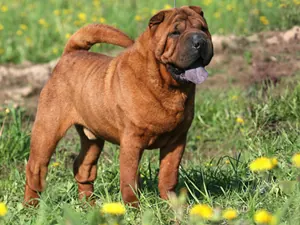
About the Chinese Shar-Pei
The Chinese Shar-Pei is an ancient breed from Guangdong, kept as a farm and fighting dog, and it came within a few dozen animals of extinction in the 1970s. The modern Western population descends from that rescue, and the heavy wrinkling seen today is more pronounced than in the original type.
The skin is the health story. Folds trap moisture and infection, and the breed has its own named condition: familial Shar-Pei fever, an inherited inflammatory disorder that causes recurrent fever and swollen hocks and can lead to amyloidosis and kidney failure. Entropion, where the eyelid rolls inward, is common enough that many puppies need surgery. A VetCompass study of 1,913 Shar-Pei sits behind some figures below.
A measured median lifespan of 10.6 years is well below the 12.5 years for dogs generally. Lifetime cost is about $32,758.
How long Chinese Shar-Peis actually live
The measured median age at death is 10.6 years, from 4,326 dogs of this breed. Breed standards usually quote 8 to 12 years, which describes the standard rather than what was recorded. 8
Every cost figure on this page is calculated across 10.6 years, so lifespan is the most load-bearing number here. It was measured in a UK population, and the American comparison sits below.
On the weight figure. Weight is a kennel club breed-standard range rather than measured population data. Lifespan is measured. Weight drives the food and grooming costs above, so a dog at the heavy end of the standard will cost more than this page shows. Confidence grade C.
US life expectancy at birth for medium purebred dogs was 12.7 years, from 13.3 million dogs at Banfield hospitals. That study grouped dogs by adult body size and states that differences between breeds within a size group were not captured, so this is not a US figure for chinese shar-peis specifically. It is the American number for dogs of this size, set beside the British number for this breed.
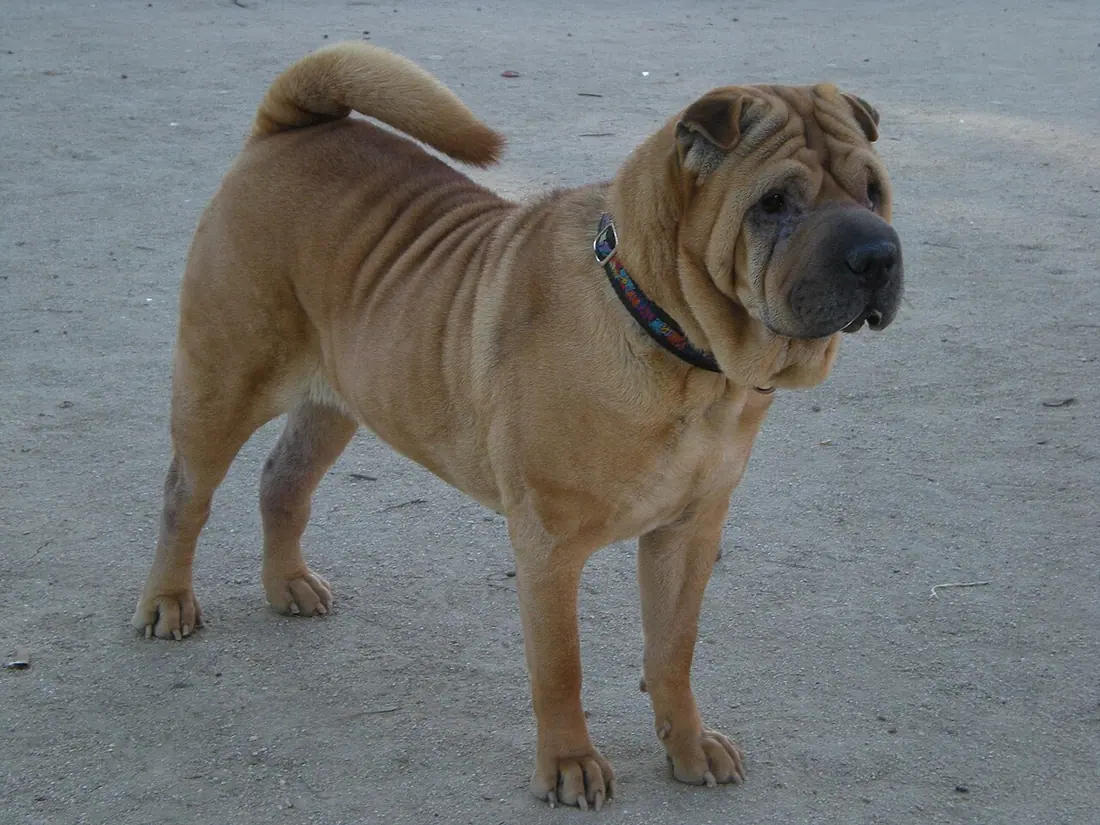
10.6 years, measured
Not a breed-standard range. This is the median age at death recorded across 4,326 Chinese Shar-Peis in the largest study of canine longevity yet published.
Short enough that the expensive years arrive sooner than most owners expect.
Familial Shar Pei fever
Roughly 23% of US Shar Pei carry the mutation behind familial Shar Pei fever, against about 1% of dogs of all breeds having comparable recurrent fever. It causes episodic fever of 103 to 107F with swelling of the hocks, lasting 12 to 36 hours.10
What it costs in years. The fever is not the real problem. Repeated inflammation drives amyloid deposition in the kidneys, and renal amyloidosis is what kills these dogs. Onset of signs is typically between one and six years, averaging just over four.
What you can do. Routine urine screening for protein loss is recommended in every Shar Pei, because kidney damage shows there before it shows anywhere else. Colchicine is the usual treatment for the fever itself. A fever climbing past 106F is an emergency.
Prevalence comes from small surveys rather than a large population study, one of them of 132 dogs. The MSD Veterinary Manual states plainly that the true prevalence is unknown. Treat 23% as the best figure available, not a precise one. We have no cost source for long-term colchicine or for managing renal amyloidosis, so we do not put a figure on it.
Food, grooming and boarding are no longer typed in per breed. Food comes from the veterinary Resting Energy Requirement for a 45 to 60 pound dog, priced at 2026 US kibble rates with a 20% allowance for treats.13 Grooming assumes a short coat on a medium dog at national average prices. Boarding assumes eight nights a year, which is the most assumption-heavy figure here and will be wrong for anyone who travels a lot or never travels at all.
Figures on this page were last checked against their sources on August 16, 2026. Every one carries its study and the population it was measured in. How we calculate.
Health problems and what they cost
Every price here is American. Health figures lead with a US study wherever one exists, with British research alongside it, because several of the largest disorder studies in veterinary medicine are UK work and no US equivalent has been published. Where both appear, the American figure comes first. Why American data is so scarce.
Each row shows the figure exactly as the study measured it. We do not convert one kind of measurement into another, because a screening result, an owner survey and a clinical record answer different questions.
- Clinical records One-year prevalence in veterinary records for this breed. The strongest evidence available.
- Owner reported Prevalence among living surveyed dogs at one point in time. Undercounts what owners do not notice, and is not lifetime risk.
- Lifetime, owner reported The share of owners who report the dog has ever had it. Counts everything across a life, so it runs higher than a one-year rate and is not comparable with one.
- Followed cohort A group of dogs enrolled young and followed for life, with diagnoses confirmed by a vet. Cumulative and still accruing, so surviving dogs remain at risk and the figure is a floor.
- Screened dogs The share of dogs submitted to the OFA registry that evaluated abnormal. Submission is voluntary and skewed toward good stock, and a radiographic finding is not the same as needing treatment.
- All dogs Measured across the whole dog population, not this breed. Context only.
Health data from 5 peer-reviewed sources. Prices from 2 US sources. Full list below.
Organ-system context. These are broad categories that already contain the specific conditions below. They are shown for scale and added to no total, because that would count the same disease twice.
- Digestive disease30%
- Eye disease22%
- Skin disease21%
- Ear disease19%
- Musculoskeletal disease15%
Ear infection (otitis externa)
Very narrow ear canals in a heavily folded head. Recurrence is common.
Entropion
The single most recorded diagnosis. Facial folds roll the eyelid inward against the eye. Usually needs surgery, sometimes twice, and untreated it can blind the dog.
Bacterial skin infection
Infection in the folds, which is the direct cost of the coat this breed was selected for.
Elbow dysplasia
Often bilateral, which doubles the surgical cost. 25.3% of 1,295 evaluated Chinese Shar-Peis were graded abnormal. Dogs are submitted voluntarily, mostly by breeders screening good stock, so the true rate in the breed is higher. Arthroscopic treatment of elbow dysplasia. Often bilateral, which roughly doubles it.
Hip dysplasia
Radiographic hip evaluation. OFA grades submitted films; the figure below is the share graded dysplastic. 15.8% of 11,048 evaluated Chinese Shar-Peis were graded abnormal. Dogs are submitted voluntarily, mostly by breeders screening good stock, so the true rate in the breed is higher. Priced as a total hip replacement, the usual choice for a dog this size. Total hip replacement with a prosthesis. Usual choice for larger dogs, and roughly double an FHO. Referral hospitals price higher. Not every dysplastic dog needs surgery, and both hips roughly doubles it.
Periodontal disease
Not measured in this breed. 8.9% of US dogs in the medium-large size category, which is where a Chinese Shar-Pei falls at about 24 kg, were diagnosed over five years. Size is the strongest predictor in this study: dogs under 6.5 kg were up to five times more likely to be diagnosed than dogs over 25 kg.
Anal sac impaction
Third most common. Cheap per visit, frequent enough to add up over a lifetime.
Aggression
Recorded in clinical notes. Not priced, because no treatment-cost source matches it. No treatment-cost source matches this condition, so it is not priced.
Patellar luxation
Kneecap slips out of its groove. Mild grades are managed; severe grades are surgical. 4.2% of 963 evaluated Chinese Shar-Peis were graded abnormal. Dogs are submitted voluntarily, mostly by breeders screening good stock, so the true rate in the breed is higher. Per knee. A grade I in a small dog can be under $2,000; a grade IV in a large breed with both knees affected can exceed $6,000.
Hypothyroidism
Cheap to treat, lifelong. Daily medication plus periodic bloodwork. 2.0% of 410 evaluated Chinese Shar-Peis were graded abnormal. Dogs are submitted voluntarily, mostly by breeders screening good stock, so the true rate in the breed is higher.
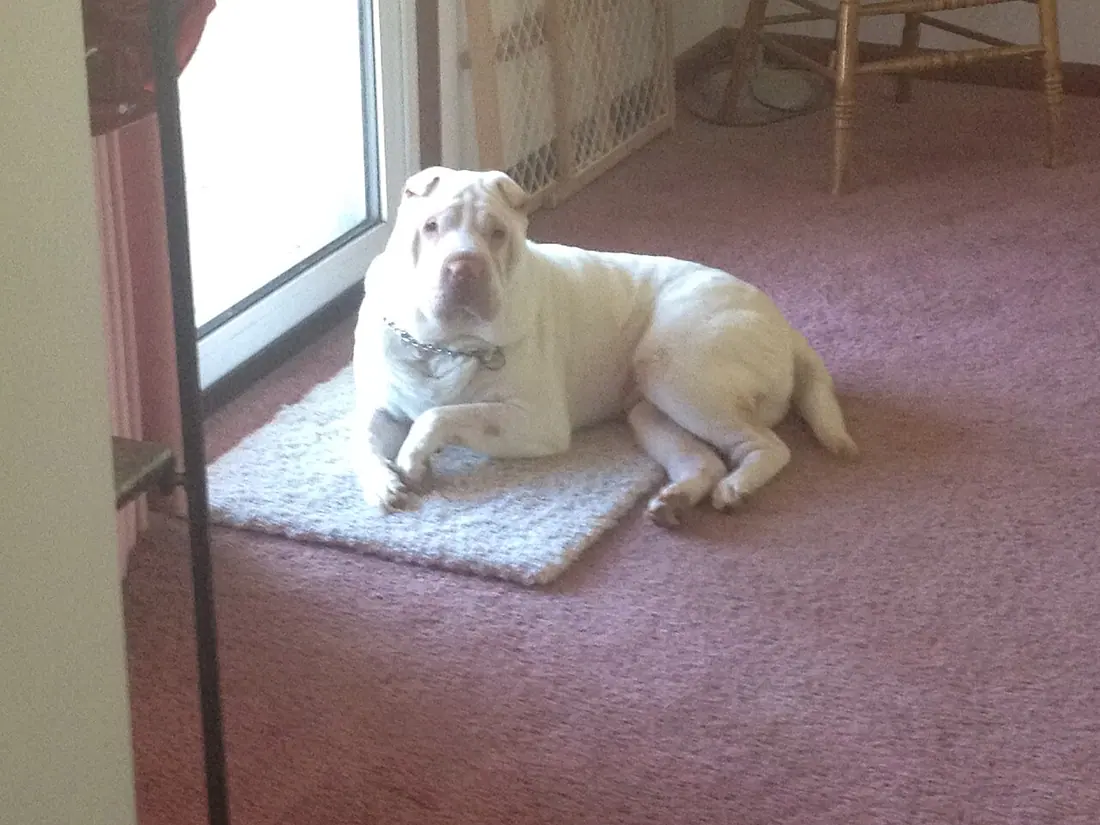
What you will actually pay
$32,758Across 10.6 years. About $2,687 a year after the first, which carries the purchase price and setup.
78% of that comes from measured prices. The rest is the puppy and retail assumptions you can adjust.
Where the money goes
The cost of owning the dog, year by year. Health spending is not included here: it is uncertain by nature and is set out separately above.
What makes up the total
- Puppy and setup$3,624
- Routine care$29,134
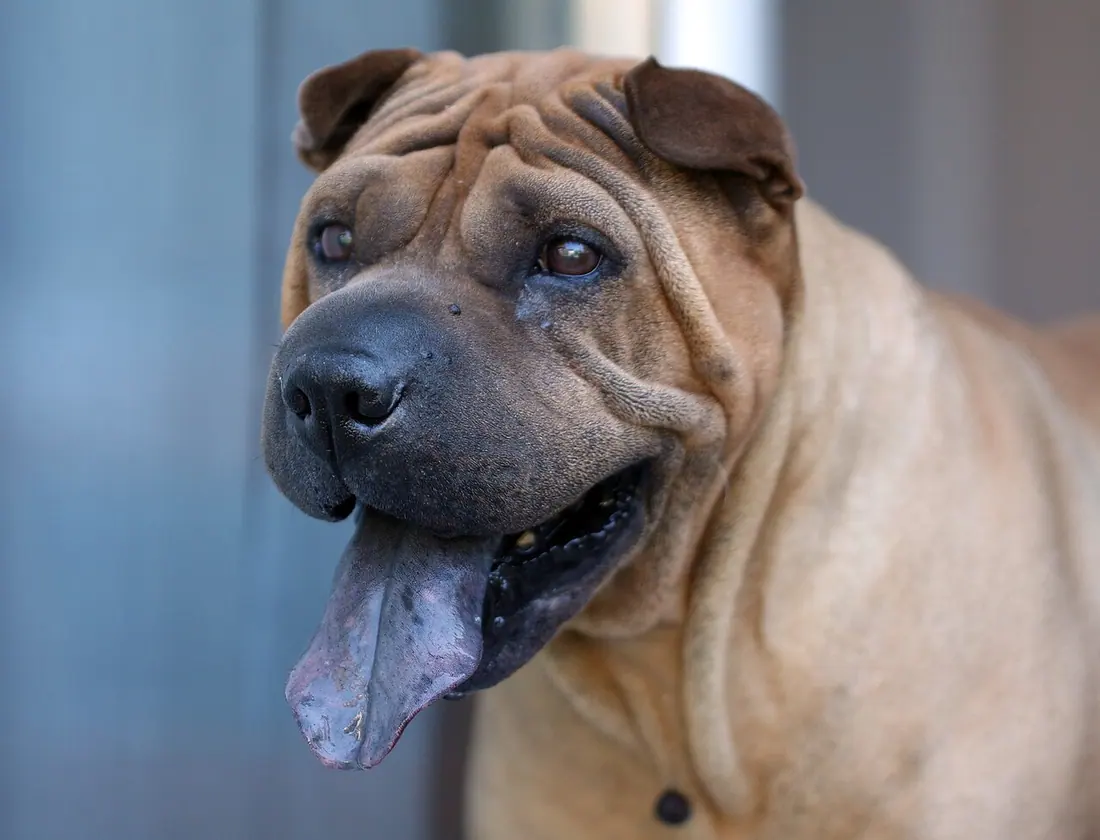
What to ask the breeder
Ask this breeder for certificates on elbow dysplasia (25% of screened dogs abnormal), hip dysplasia (16% of screened dogs abnormal), patellar luxation (4% of screened dogs abnormal). Those are the screenings where Chinese Shar-Peis score worst in the OFA registry, so they are the ones worth seeing paperwork for. A breeder who has done the testing will produce it without being pushed; one who has not will talk about how healthy their line is instead.
Where you live changes the number
Veterinary prices vary by more than half across the country. Everything above is a national average. Pick your state to see what it means for you.
What a Chinese Shar-Pei costs where you live
Average dog vet visit, $57 in West Virginia to $127 in Hawaii. Tap a state.
See all 51 in a table
| State | Avg visit | vs national | Lifetime here |
|---|---|---|---|
| Hawaii | $127 | +81% | $45,070 |
| Massachusetts | $99 | +41% | $39,005 |
| District of Columbia | $97 | +38% | $38,572 |
| California | $94 | +34% | $37,922 |
| Alaska | $84 | +20% | $35,756 |
| New York | $83 | +18% | $35,540 |
| Maryland | $79 | +13% | $34,673 |
| Vermont | $78 | +11% | $34,457 |
| New Jersey | $77 | +10% | $34,240 |
| Washington | $77 | +10% | $34,240 |
| Connecticut | $76 | +8% | $34,023 |
| New Hampshire | $76 | +8% | $34,023 |
| Rhode Island | $76 | +8% | $34,023 |
| Oregon | $75 | +7% | $33,807 |
| Maine | $74 | +5% | $33,590 |
| Arizona | $73 | +4% | $33,374 |
| Colorado | $72 | +3% | $33,157 |
| Florida | $70 | 0% | $32,724 |
| Montana | $70 | 0% | $32,724 |
| Utah | $70 | 0% | $32,724 |
| Delaware | $69 | -2% | $32,507 |
| Idaho | $69 | -2% | $32,507 |
| Nevada | $69 | -2% | $32,507 |
| Virginia | $69 | -2% | $32,507 |
| North Carolina | $66 | -6% | $31,857 |
| South Carolina | $66 | -6% | $31,857 |
| Wisconsin | $66 | -6% | $31,857 |
| Wyoming | $65 | -7% | $31,641 |
| Illinois | $64 | -9% | $31,424 |
| Minnesota | $64 | -9% | $31,424 |
| Nebraska | $64 | -9% | $31,424 |
| Ohio | $64 | -9% | $31,424 |
| Pennsylvania | $64 | -9% | $31,424 |
| Kentucky | $63 | -10% | $31,208 |
| Louisiana | $63 | -10% | $31,208 |
| New Mexico | $63 | -10% | $31,208 |
| South Dakota | $63 | -10% | $31,208 |
| Texas | $63 | -10% | $31,208 |
| Georgia | $62 | -12% | $30,991 |
| Indiana | $62 | -12% | $30,991 |
| North Dakota | $62 | -12% | $30,991 |
| Tennessee | $62 | -12% | $30,991 |
| Iowa | $61 | -13% | $30,774 |
| Michigan | $61 | -13% | $30,774 |
| Missouri | $60 | -14% | $30,558 |
| Alabama | $59 | -16% | $30,341 |
| Arkansas | $58 | -17% | $30,125 |
| Kansas | $58 | -17% | $30,125 |
| Oklahoma | $58 | -17% | $30,125 |
| Mississippi | $57 | -19% | $29,908 |
| West Virginia | $57 | -19% | $29,908 |
Source: 2025-2026 Synchrony Average Procedural Cost Study, ASQ360 Market Research, all 50 states and DC. We apply each state's index only to the veterinary share of the total. Food, grooming, boarding and the puppy price stay at the national figure, because a state's vet pricing says nothing about what a breeder or a bag of kibble costs there.
The number most owners get wrong
$598is what dog owners actually spend on veterinary care in a year, measured by the AVMA. Following the recommended schedule costs $1,301.
The gap is care that does not happen. Only 14% of dogs receive dental care at a vet's office, and 80% have periodontal disease by age three.
What veterinary care actually costs
Two measured figures that disagree, and the gap is the point.
The $703 gap is care that does not happen. We show the higher figure in the total for this breed, because it is what the recommended schedule costs. If you expect to spend closer to the average, the real total for a Chinese Shar-Pei is nearer $24,654.
Where the gap comes from
This is not owners being careless. It is the single largest difference between what veterinary medicine recommends and what actually happens, and dental care is most of it.
- 14%of dogs receive dental care at a veterinary office, in an AVMA owner survey, against a guideline of a cleaning under anaesthesia every year for small breeds and every one to two years for larger ones.
- Two thirdsof pet owners do not provide the dental care their veterinarian recommends, according to the AAHA.
- 80%of dogs have some periodontal disease by age three. It is the most commonly diagnosed condition in adult dogs, and most of it sits below the gumline where an owner cannot see it.
- Roughly a quarterof dog owners reported skipping veterinary visits altogether in the year the AVMA last measured it.
This matters for budgeting in an uncomfortable way. The lower figure is what people spend, not what a dog needs. A dental cleaning deferred is often a set of extractions later, which costs several times more and is not preventive care any insurer will cover.
How much of the total is sourced
78% of the $32,758 figure comes from measured prices: veterinary care from a 50-state cost study, and the lifespan it is spread over from a study of 584,734 dogs. The remaining 22%, about $7,280, is an observed market range for the puppy plus retail assumptions for supplies, a training course and boarding. Those are the numbers to adjust if your situation differs: plenty of people never board a dog.
Dental and visit statistics from the AVMA and the AAHA, 2026. Recommended care priced from the 2025-2026 Synchrony/CareCredit procedural cost study. Actual spending from the AVMA 2025 Pet Ownership and Demographic Sourcebook, self-reported by owners.
Insurance for a Chinese Shar-Pei
Coverage is protection against an uncommon large bill. It is not a way to save money on the care you already know is coming.
The bills it exists for
Documented conditions in this breed where a single episode runs into the thousands. We are not telling you how likely these are, because the prevalence evidence is not strong enough to carry that claim.
- Hip dysplasiaPriced as a total hip replacement, the usual choice for a dog this size.$3,500–$7,000
- Elbow dysplasiaArthroscopic treatment of elbow dysplasia.$3,000–$5,000
- Patellar luxationPer knee.$1,000–$5,000
What the tiers actually buy
Average US premiums for a dog, for the year ended December 2025.
- Accident onlyInjuries, not illness. Cheap because it covers far less.$190 a year
- Accident and illnessThe standard policy and the one most figures refer to. Up 11.5% on last year.$836 a year
- With embedded wellnessAdds routine care. Compare it against what routine care actually costs before assuming it saves money.$1,414 a year
What actually decides whether a claim is paid
Not the breed, and usually not the premium. Carrier terms verified August 2026; they change, and they vary by state.
- Hereditary and congenital conditions are usually covered
- This is the most common misconception about pet insurance. Every major US carrier covers inherited and congenital conditions on a standard accident-and-illness policy, provided they are not pre-existing. Trupanion covers them with no payout limit. Embrace covers them with no per-condition or per-incident limit at no extra cost, and states that its policies fully cover breed-specific conditions. Healthy Paws covers them too. Nationwide makes hereditary and congenital a coverage option you select rather than an automatic inclusion. Cheaper and accident-only policies sometimes exclude them entirely, so it is worth confirming in writing.
- Most pre-existing conditions are excluded
- Anything your dog has shown signs of before coverage began, or during the waiting period, is normally excluded. This, not heredity, is what actually stops most claims being paid. The detail varies more than people expect: several carriers will cover a condition they classify as curable once the dog has been symptom-free and treatment-free for a set period, commonly twelve months, subject to state rules and the policy wording. It is also why enrolling a healthy puppy costs less and excludes less than insuring a dog that already has a history.
- Orthopedic waiting periods vary a lot
- The clearest example of why the carrier matters more than the breed. Healthy Paws applies a 12-month waiting period to anything related to hip dysplasia, and will not cover it at all if the dog was enrolled at six years or older. Trupanion applies its standard 30-day illness waiting period. Some carriers will waive an orthopedic wait after a vet exam. For any breed with joint risk, this single clause can matter more than the premium.
- Standard waiting periods
- Typically 2 to 30 days for illness and 2 to 5 days for accidents. Trupanion is 5 days for injury and 30 for illness. Embrace is 14 days for illness. Nothing that appears during the wait is covered.
- Bilateral condition rule
- If one side of a paired body part was affected before coverage, many carriers exclude the other side too. Relevant for hips, elbows, knees, eyes and ears.
- Age at enrollment
- Premiums rise with age, some carriers cap new enrollment, and some restrict specific conditions for older enrollees. Healthy Paws requires enrollment before the 14th birthday and drops hip dysplasia cover from age six.
Premium range from NAPHIA industry data. Coverage terms from published carrier policies and independent reviews, checked 16 August 2026. We are not an insurance agency, we do not sell policies, and we make no recommendation. Terms vary by carrier and policy, and the exclusions in your own policy govern.
First year breakdown
| Item | What it covers | Cost |
|---|---|---|
| Puppy purchase | Observed market range, not an authoritative source | $2,250 |
| Vaccine series | Three rounds plus rabies | $235 |
| Spay or neuter | Includes anesthesia and monitoring | $471 |
| Supplies | Crate, harness, bedding, bowls | $420 |
| Food | About 3.2 cups daily at maturity, computed from body weight | $756 |
| Grooming | short coat, medium dog | $214 |
| Boarding | Eight nights a year at an average rate | $416 |
| Preventatives | Flea, tick, heartworm | $708 |
| Training class | Six week group course | $200 |
| Microchip | One time | $48 |
| First year total | $6,311 | |
Worth knowing
Ask this breeder for certificates on elbow dysplasia (25% of screened dogs abnormal), hip dysplasia (16% of screened dogs abnormal), patellar luxation (4% of screened dogs abnormal). Those are the screenings where Chinese Shar-Peis score worst in the OFA registry, so they are the ones worth seeing paperwork for. A breeder who has done the testing will produce it without being pushed; one who has not will talk about how healthy their line is instead.
Feeding an adult
At 53 lb, roughly 1207 kcal a day, about 3.2 cups at 380 kcal per cup.
Advertisement
Compare coverage for a Chinese Shar-Pei
Premiums run $190 to $1,414 a year. Routine care of roughly $1,301 a year is not covered by any standard policy, so compare on what happens when something expensive and unexpected occurs.
Chinese Shar-Pei vs other breeds
Why Chinese Shar-Peis cost what they do
The price
Chinese Shar-Peis are expensive to breed before they are expensive to own. Flat-faced breeds frequently need assisted mating and a planned cesarean section, because the puppies' heads are large relative to the mother's pelvis. Those costs are carried by a small litter and passed on in the purchase price. Expect $1,500 to $3,000 from a breeder who health tests. That figure is an observed market range rather than a sourced statistic, and it is the least reliable number on this page. Everything after the purchase is more predictable: about $2,687 a year in food, grooming, boarding, routine veterinary care, preventatives and dental.
The build
The shortened muzzle that defines the breed houses the same soft tissue a longer one would, with less room for it. That is why airway, skin fold and eye problems cluster in flat-faced dogs rather than appearing at random. On hips, 16% of Chinese Shar-Peis submitted to OFA were graded dysplastic, and 25% on elbows. Those are dogs a breeder chose to submit, so the rate across the breed is higher, and a radiographic grade is not the same as a dog that will need surgery.
Common questions
How much does a Chinese Shar-Pei cost?
A Chinese Shar-Pei puppy costs $1,500 to $3,000. The first year totals about $6,311 including vaccines, neutering and supplies, then roughly $2,687 a year after that. Across a median lifespan of 10.6 years that is about $32,758 to own. Health costs sit outside that figure and are listed separately, because the evidence is not strong enough to reduce them to one number.
What health problems do Chinese Shar-Peis have?
The largest measured figure is elbow dysplasia: 25% of dogs screened by OFA evaluated abnormal. Treatment runs $3,000 to $5,000. Each figure on the page states the population it was measured in, because these are different kinds of measurement and are not interchangeable.
Is pet insurance worth it for a Chinese Shar-Pei?
A standard accident-and-illness policy averaged $836 a year in the latest published industry figures. Held flat, that is about $8,862 across 10.6 years, though real premiums rise with age and vary by carrier, state, deductible and reimbursement level, so treat it as a benchmark rather than a quote. Accident-only cover is cheaper at about $190 a year but pays nothing toward illness, and policies with a wellness rider reach $1,414 while mostly prepaying routine care you would buy anyway. Routine care of about $1,301 a year is not covered by any standard policy. Coverage is protection against an uncommon large bill, not a way to save money on predictable care. What decides whether a claim is paid is usually the policy mechanics rather than the breed: pre-existing conditions, waiting periods and bilateral rules.
Sources
Grade A is a peer-reviewed prevalence figure from a large primary-care population. Grade B needs a conversion or comes from a single market. Grade C and D are weaker and labeled wherever they appear.
- 1VetCompass Shar Pei 2023Grade AData 2013Is it now time to iron out the wrinkles? Health of Shar Pei dogs under primary veterinary care in the UK. Canine Medicine and Genetics. 2023.1,913 Shar Pei under UK primary veterinary care during 2013View source
- 2Synchrony/CareCredit 2026Grade BData 2025-20262025-2026 Synchrony Average Procedural Cost Study for Veterinary Practices Across the United States, conducted by ASQ360 Market Research. Published by CareCredit.All 50 US states and the District of ColumbiaView source
- 3VetCompass 2014Grade AData 2013O'Neill DG, Church DB, McGreevy PD, Thomson PC, Brodbelt DC. Prevalence of disorders recorded in dogs attending primary-care veterinary practices in England. PLOS ONE. 2014;9(3):e90501.148,741 dogs across 93 UK clinics; 3,884 records reviewed in detailView source
- 4OFAGrade CData 1974-2026Orthopedic Foundation for Animals, Disease Statistics by Breed. Cumulative evaluations submitted to the OFA registry.US. Voluntarily submitted screening evaluations, not a random population sampleView source
- 5Orthopedic price guides 2026Grade CData 2026Published US veterinary price guides and specialist clinic fee pages for hip, elbow and patellar surgery, cross-checked across MetLife Pet Insurance, Lemonade, Vety, PetPlanWise, SustainableVet and SurgiPet. Retrieved 16 August 2026.US, general and referral practiceView source
- 6VetCompass 2021Grade AData 2016O'Neill DG, James H, Brodbelt DC, Church DB, Pegram C. Prevalence of commonly diagnosed disorders in UK dogs under primary veterinary care: results and applications. BMC Veterinary Research. 2021;17:69.Random sample of 22,333 UK dogs from 784 clinics during 2016View source
- 7Wallis 2021 by dog sizeGrade BData 2016-2021Wallis C, Saito EK, Salt C, Holcombe LJ, Desforges NG. Association of periodontal disease with breed size, breed, weight, and age in pure-bred client-owned dogs in the United States. The Veterinary Journal 2021;275:105717, Table 6.2,841,038 US dogs at Banfield hospitals over five years, grouped by breed sizeView source
- 8McMillan 2024Grade AData 2016-2020McMillan KM, Bielby J, Williams CL, Upjohn MM, Casey RA, Christley RM. Longevity of companion dog breeds: those at risk from early death. Scientific Reports. 2024;14:531.584,734 UK dogs including 284,734 deceased, across 155 breedsView source
- 9Dog Aging Project HLESGrade BData 2019-2025Dog Aging Project. Curated Data Summary Tables, Health and Life Experience Survey, 2025 release. Retrieved 17 August 2026.52,599 US dogs enrolled in the Dog Aging Project, owner reportedView source
- 10Shar Pei feverGrade CData 1990-2013Familial Shar Pei fever and renal amyloidosis, summarized in the MSD Veterinary Manual and Clinician's Brief, with prevalence from an epidemiological survey of privately owned dogs reporting recurrent fever of unknown origin in 23% of Chinese Shar Pei against 1% of dogs of all breeds.132 Chinese Shar Pei and 98 dogs of all breedsView source
- 11Banfield US life expectancyGrade AData 2013-2019Montoya M, Morrison JA, Arrignon F, Spofford N, Charles H, Hours M-A, Biourge V. Life expectancy tables for dogs and cats derived from clinical data. Frontiers in Veterinary Science. 2023;10:1082102.13,292,929 unique dogs at 1,152 Banfield hospitals across the USAView source
- 12AKC 2025 registrationsGrade AData 2025American Kennel Club. Most Popular Dog Breeds of 2025, from AKC registration statistics covering 202 recognized breeds.AKC registration statistics for the 2025 calendar yearView source
- 13Care cost model 2026Grade CData 2026The Breed Report care cost model. Food is computed from the veterinary Resting Energy Requirement, RER = 70 x (kg^0.75), times a 1.6 maintenance factor for a neutered adult, divided by kibble caloric density, priced at 2026 US retail. Grooming and boarding are computed from 2026 US national average prices by body size and coat type. Inputs and assumptions are published in full.Computed per breed from measured weight and coat typeView source
Each figure is shown as the study measured it, with the population beside it. We do not convert one kind of measurement into another. See the full method. Not veterinary advice.