
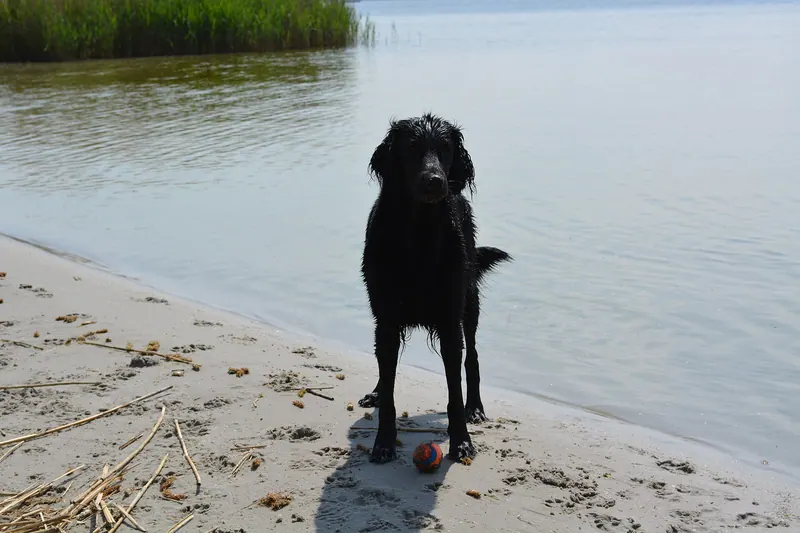
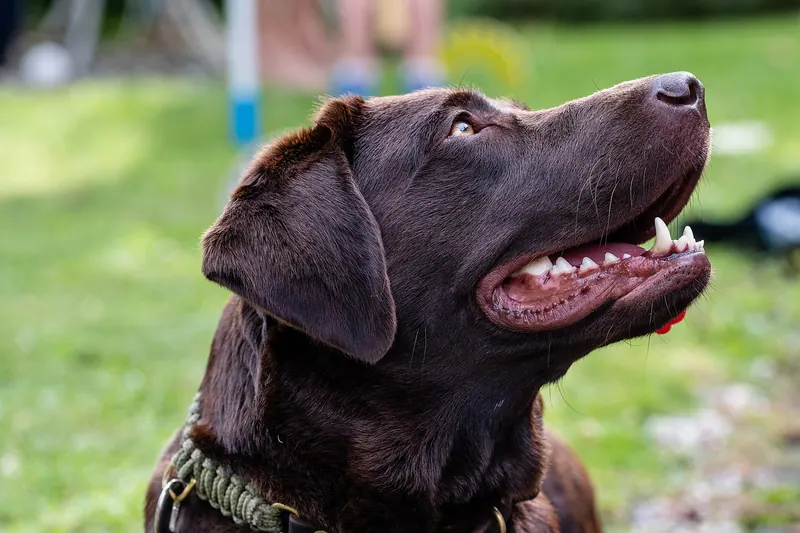
Side by side
Both columns come from the same cost model, so every row is a like for like comparison.
| Measure | Flat-Coated Retriever | Labrador Retriever |
|---|---|---|
| Lifetime cost | $39,831 | $41,265 |
| First year | $6,615 | $6,016 |
| Monthly average | $284 | $263 |
| Puppy price | $1,500 to $3,000 | $1,200 to $2,500 |
| Routine care, yearly | $2,991 | $2,792 |
| Documented conditions | 5 | 28 |
| Median lifespan | 11.7 yrs | 13.1 yrs |
| Adult weight | 60 to 70 lb | 55 to 80 lb |
| Daily food | 3.7 cups | 3.8 cups |
| Grooming, yearly | $470 | $250 |
| Risk profile | Moderate | |
| Biggest single risk | Skin disease | Degenerative joint disease |
Health risks compared
What tends to go wrong in each breed, how often, and what it costs to treat.
| Condition | Measured result | Treatment cost |
|---|---|---|
| Skin disease | 36%1-yr clinical | $252–$679 |
| Digestive disease | 30%1-yr clinical | $354–$954 |
| Musculoskeletal disease | 15%1-yr clinical | $281–$756 |
| Periodontal disease | 13%1-yr clinical | $246–$663 |
| Anal sac impaction | 7%1-yr clinical | $84–$226 |
| Condition | Measured result | Treatment cost |
|---|---|---|
| Degenerative joint disease | 6%1-yr clinical | $281–$756 |
| Overweight/obesity | 9%1-yr clinical | $168–$452 |
| Obesity | 9%1-yr clinical | $168–$452 |
| Dental disease | 76%1-yr clinical | $246–$663 |
| Skin disease | 36%1-yr clinical | $252–$679 |
| Digestive disease | 30%1-yr clinical | $354–$954 |
| Musculoskeletal disease | 15%1-yr clinical | $281–$756 |
| Ear infection (US) | 14%lifetime, owner | not priced |
| Dog bite (US) | 10%lifetime, owner | not priced |
| Osteoarthritis (US) | 8%lifetime, owner | not priced |
| Giardia (US) | 8%lifetime, owner | not priced |
| Ear infection | 7%1-yr clinical | $100–$270 |
| Seasonal allergies (US) | 7%lifetime, owner | not priced |
| Dental calculus (US) | 7%lifetime, owner | not priced |
| Fractured teeth (US) | 7%lifetime, owner | not priced |
| Anal sac impaction | 7%1-yr clinical | $84–$226 |
| Cruciate ligament rupture (US) | 7%lifetime, owner | not priced |
| Lipoma | 6%owner survey | not priced |
| Extracted teeth (US) | 6%lifetime, owner | not priced |
| Bordetella and/or parainfluenza (US) | 5%lifetime, owner | not priced |
| Arthritis | 4%owner survey | $281–$756 |
| Elbow dysplasia | 3%owner survey | $3,000–$5,000 |
| Hypersensitivity (allergic) skin disorder | 3%owner survey | $629–$1,694 |
| Hip dysplasia | 2%owner survey | $3,500–$7,000 |
| Autoimmune thyroiditis | 2%screened dogs | $169–$455 |
| Skin (cutaneous) cyst | 2%owner survey | not priced |
| Degenerative myelopathy | 2%screened dogs | not priced |
| Otitis externa | 2%owner survey | $100–$270 |
| Skin cancer/tumor | 2%owner survey | $3,415–$9,194 |
| Patellar luxation | 1%screened dogs | $1,000–$5,000 |
| Congenital heart disease | 0%screened dogs | $534–$1,438 |
| Hip and elbow dysplasia | n/a | $2,291–$6,169 |
| Cancer | n/a | $3,415–$9,194 |
Advertisement
Both breeds carry surgical risk, and premiums are priced by breed
Expected vet costs are $0 for the Flat-Coated Retriever and $922 for the Labrador Retriever. Every policy excludes anything already diagnosed, so this is worth sorting out before you pick either dog.
Common questions
Is a Flat-Coated Retriever or a Labrador Retriever more expensive?
The Flat-Coated Retriever is cheaper by about $1,434 over a lifetime. Flat-Coated Retriever: $39,831. Labrador Retriever: $41,265. Health costs are not inside either figure. They are documented separately below, in the units each study used.
Which lives longer, a Flat-Coated Retriever or a Labrador Retriever?
The Labrador Retriever has the longer typical lifespan. Flat-Coated Retriever: 11.7 years. Labrador Retriever: 13.1 years.
Which is healthier, a Flat-Coated Retriever or a Labrador Retriever?
Both figures below are what it costs to own the dog, not what it costs if something goes wrong. The Flat-Coated Retriever's biggest single risk is skin disease, seen in 36% of the breed. For the Labrador Retriever it is degenerative joint disease, at 6%.
How we calculated this
Both breeds run through one model, so the comparison is like for like. Full method.